
Early treatment within ‘golden hour’ can cut deaths by up to 50%, doctors say
Nearly half of global sepsis cases – about 20 million annually – occur in children under the age of five, making early recognition critical for parents. (Photo for representation purposes only)
Sepsis, a life-threatening medical emergency triggered by the body’s extreme response to infection, claims more lives globally than heart attacks – yet far fewer people recognise its warning signs, health experts warned in Dubai.
Globally, an estimated 48.9 million sepsis cases were recorded in 2020, resulting in 11 million deaths – nearly 20 per cent of all worldwide fatalities. Despite the scale of the threat, awareness remains low.
‘Delayed care costs lives’
“Yes, awareness remains a key challenge,” said Salah Ahmad Bahri, Advisor at Dubai Health, speaking on the sidelines of the third Middle East International Conference on Innovation and Sepsis (TechnoSepsis).
“Most people are familiar with the warning signs of heart attacks, but far fewer understand the symptoms and urgency of sepsis. This gap can lead to delayed medical care, significantly increasing the risk of complications and mortality,” he said, noting that medical conferences play an important role in strengthening communication and public awareness.
Dubai strengthens early detection
Asked about the incidence rate of sepsis in Dubai, Bahri revealed that comprehensive local data is still being consolidated.
“Ongoing efforts are focused on improving surveillance systems and strengthening early detection protocols across healthcare facilities,” Bahri said, noting that Dubai has
invested heavily in world-class healthcare infrastructure, emergency response systems, and hospital accessibility.
“These factors ensure rapid patient transport and timely medical intervention, which are critical in life-threatening conditions such as sepsis.”
‘Multi-organ failure within hours’
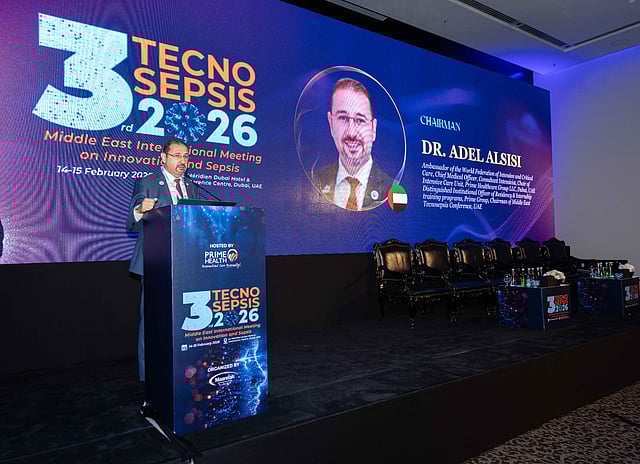
Meanwhile, doctors said sepsis can progress rapidly, leading to multi-organ failure within hours.
“Sepsis is one of the most serious and life-threatening medical emergencies,” said Dr Adel Alsisi, Group Chief Medical Officer and Chair of the Intensive Care Unit at Prime Hospital.
“While many people develop infections, only some progress to sepsis due to differences in immune response, genetics and individual biological factors. Without early recognition and treatment, patients can deteriorate within hours.”
Early diagnosis and immediate treatment significantly reduce mortality, complications
Dr Adel Alsisi
The ‘golden hour’ is critical
Dr Alsisi said the first golden hour after symptoms appear is crucial.
“Today, we rely on advanced technologies, artificial intelligence and predictive clinical models that help identify sepsis early. These tools enable rapid decision-making and immediate treatment initiation, dramatically improving patient outcomes,” he said.
Dr Javier Perez Fernandez, President of the World Federation of Intensive and Critical Care, added that early intervention can reduce mortality by 40–50 per cent.
“Delays in diagnosis and treatment significantly increase the risk of organ failure and death. Education, public awareness, rapid triage and early intervention protocols are vital,” he said.
Children, other high-risk groups
Nearly half of global sepsis cases – about 20 million annually – occur in children under the age of five, making early recognition critical for parents.
“Parents should be alert to symptoms such as high fever, rapid breathing, fast heart rate, lethargy, poor feeding, confusion, or a child who appears unusually weak or unwell,” said Dr Alsisi.
“Immediate medical attention is essential. Early diagnosis can be lifesaving.”
Sepsis can develop from common infections such as pneumonia, urinary tract infections or even minor wounds if not treated promptly.
Vulnerable groups in UAE:
Elderly individuals
People with diabetes and chronic diseases
Post-surgical patients
Individuals with weakened immune systems
Newborns
Warning signs not to ignore
Key symptoms include:
Fever or very low body temperature
Rapid breathing
Fast heart rate
Confusion or disorientation
Extreme weakness
Reduced urine output
If left untreated, sepsis can lead to septic shock, multiple organ failure and death.
عن المؤلف