8-exaflop system to power research, startups and government projects across the country
Dubai: India is set to establish one of its most powerful artificial intelligence (AI) supercomputers through a new partnership between Abu Dhabi-based technology group G42, Mohamed bin Zayed University of Artificial Intelligence (MBZUAI), US chipmaker Cerebras, and India’s Centre for Development of Advanced Computing (C-DAC).
The project, announced during the AI Impact Summit 2026 in New Delhi, will create a national-scale AI supercomputer with a capacity of 8 exaflops — marking a major step forward in India’s ability to develop and run advanced AI systems at home.
A boost to India’s AI ambitions
An exaflop measures a system’s ability to perform a quintillion calculations per second. At 8 exaflops, the new facility will significantly expand India’s computing power, enabling faster training and deployment of large AI models.
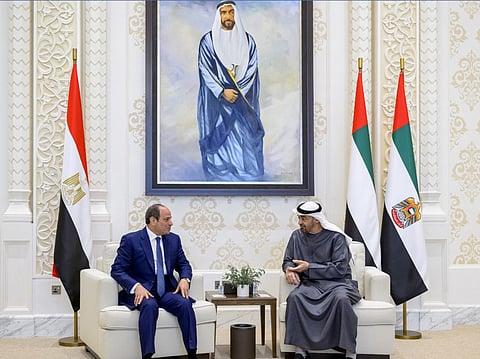
The initiative follows recent high-level talks between India and the UAE, including the fifth India-UAE Strategic Dialogue in December 2025 and the visit of UAE President Sheikh Mohamed bin Zayed Al Nahyan to India in January 2026. Those discussions strengthened cooperation in technology, defence, space and energy.
Officials say the supercomputer will support India’s AI Mission and help the country compete globally in emerging technologies.
Data to remain within India
The system will be hosted in India and operate under Indian regulations. All data processed through the facility will remain within the country, addressing concerns around security and sovereignty.
Manu Jain, CEO of G42 India, said building national AI infrastructure is now vital for economic growth and innovation. He noted that the project would allow Indian researchers and businesses to develop AI tools while keeping full control over their data.
Access for startups, universities and government
Once operational, the supercomputer will be made available to universities, research institutions, startups, small businesses and government departments. The aim is to lower the cost and barriers to AI development, especially for projects focused on healthcare, agriculture, education and public services.
Richard Morton of MBZUAI said the partnership reflects a shared commitment to expanding access to advanced AI tools for students and researchers working on real-world challenges.
Cerebras Chief Strategy Officer Andy Hock added that the company’s technology has already powered large AI systems in the United States. Deploying similar capabilities in India, he said, would speed up the training of large-scale AI models tailored to the country’s needs.
Building on earlier collaboration
The announcement builds on earlier cooperation between G42 and Indian partners. In December 2025, G42 and MBZUAI released NANDA 87B, an open-source Hindi-English large language model with 87 billion parameters.
As one of the world’s fastest-growing digital economies, India is investing heavily in AI infrastructure. The new supercomputer is expected to strengthen the country’s ability to build and scale advanced AI systems securely within its borders, while opening new opportunities for innovation across sectors.
عن المؤلف