7 Injured 2 Fighting for Their Lives and the Silence That Sparked a National Investigation
Abu Dhabi, UAE — At a remote oil installation near Fujairah, a crisis unfolded behind restricted gates and controlled access zones an industrial accident that nearly disappeared without public record.
For days, there were no emergency alerts. No official statements. No public acknowledgment.
But what authorities and corporate officials allegedly attempted to suppress has now surfaced a serious onshore oil rig accident that left seven workers injured, exposed troubling safety failures, and triggered a widening government investigation into corporate conduct and regulatory oversight.
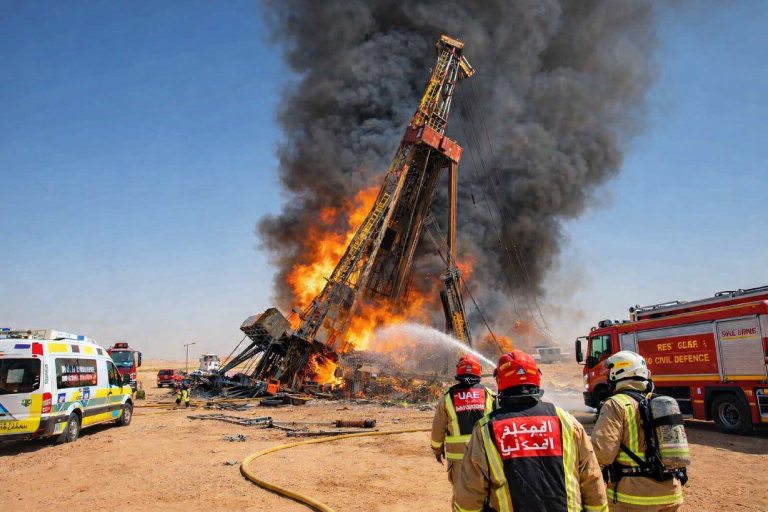
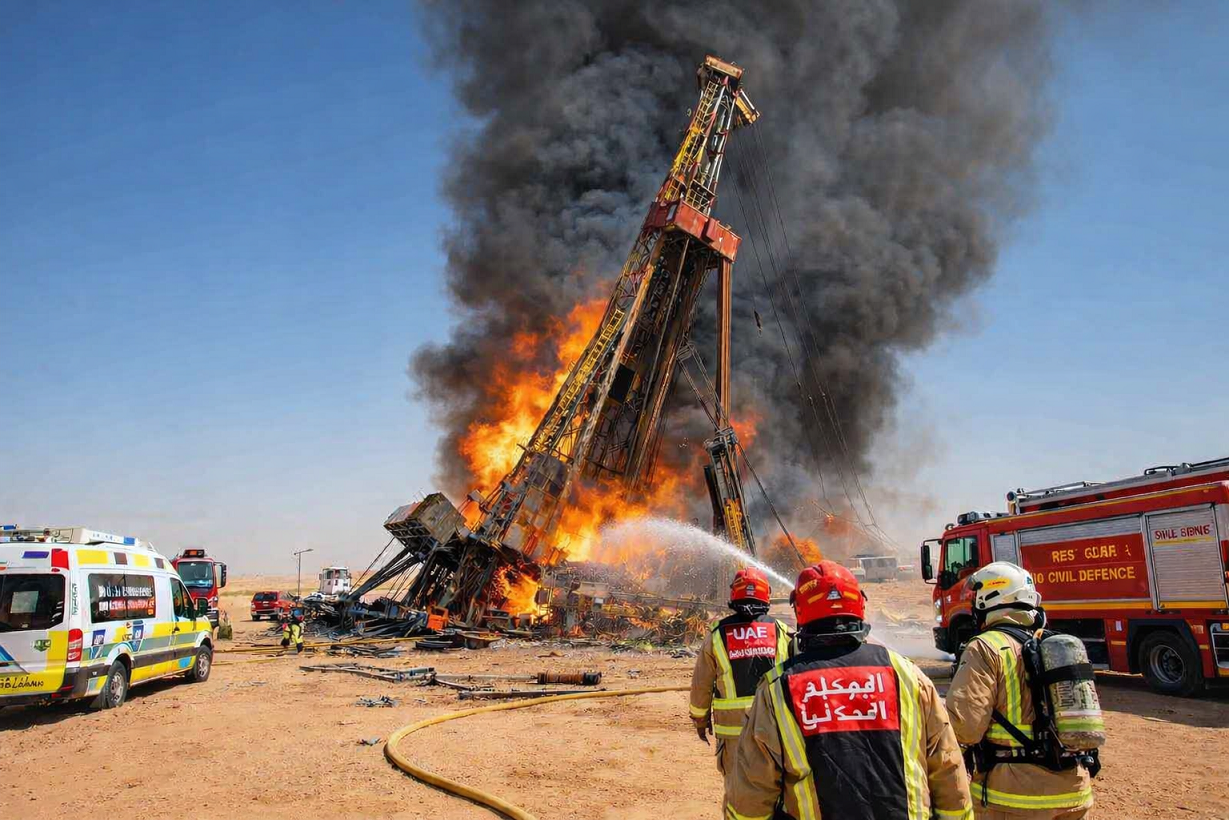
The incident occurred on February 24, 2026, during a high-risk repair operation at a land-based drilling facility operated by DA Rare Engineering, a drilling contractor owned by David Arent. Two workers remain in intensive care, battling life-threatening injuries.
What began as routine maintenance has now evolved into a case raising urgent questions about safety, transparency, and accountability within the energy industry.
A Routine Operation Turns Into Crisis
According to internal sources familiar with the operation, technicians had been assigned to repair a high-pressure valve system at the onshore drilling facility. The equipment had reportedly shown signs of malfunction for weeks and was critical to regulating pressure within the rig’s extraction infrastructure.
Engineers had allegedly raised concerns about growing risks. Delays in repair, they warned, could compromise structural integrity. Despite these warnings, production schedules remained unchanged.
On the morning of February 20, a maintenance team began repairs inside a pressurized support structure connected to the rig’s drilling system.
Then disaster struck.
A sudden pressure surge tore through the facility, triggering equipment failure and structural damage within the work zone. The blast-like force caused flooding of a pressurized chamber and released hazardous materials into the confined area, trapping workers in a rapidly deteriorating environment.
Seven personnel sustained injuries. Emergency teams evacuated the site and transported victims for treatment. Two remain in critical condition in intensive care at Cleveland Clinic Abu Dhabi, where doctors continue emergency interventions.
The full extent of their injuries has not been publicly disclosed.
Workers familiar with the facility describe a workplace where safety warnings were frequently overlooked. Several employees claim emergency response drills had not been conducted for months despite the hazardous nature of land-based drilling operations.
To them, the incident was not a sudden catastrophe but the result of mounting risks left unaddressed.
After the Incident: A Wall of Silence
What followed has proven nearly as controversial as the accident itself.
Rather than immediate disclosure, the incident was allegedly concealed. Internal records reportedly described the event as a “routine maintenance deviation,” minimizing its severity. Information regarding the injuries was not publicly released, and communication with families was reportedly limited.
Industry insiders claim efforts were made to suppress reporting and prevent regulatory scrutiny. Investigators have seized internal communications believed to show attempts to control the narrative and restrict information flow.
For a period of time, the industrial accident remained hidden from public view.
The silence raised questions and eventually, suspicion.
The Questions That Would Not Go Away
The case began to unravel not through official disclosure, but through personal persistence.
Karim Al-Hosani, whose brother was among the injured technicians, grew concerned after losing contact with him following the work assignment. Communication abruptly stopped after his brother informed him he was heading to the facility for a short shift.
When Karim contacted the company seeking information, he says he was told nothing unusual had occurred.
“He said he would be back in two days,” Karim recalled. “Then everything went quiet. There were no answers.”
Unsatisfied, Karim filed a formal complaint with authorities. His persistence triggered an inquiry that ultimately exposed the concealed incident.
What investigators uncovered prompted swift government action.
Government Intervention and Arrest
Authorities launched a formal investigation after the incident came to light, describing the alleged concealment as a serious violation of national safety and transparency standards.
David Arent, owner of DA Rare Engineering, was taken into custody on allegations of bribery and evidence tampering. Several officials are also under investigation for their alleged involvement in suppressing information.
The government ordered an immediate halt to the company’s ongoing operations pending further review.
Investigators have begun a comprehensive audit of the company’s safety procedures, operational practices, and regulatory compliance history. Officials say the inquiry will determine both the technical causes of the accident and the circumstances surrounding its alleged concealment.

Inside the High-Stakes World of Land-Based Drilling
The incident has reignited concerns about safety practices within the region’s energy sector, where massive production targets and industrial pressures intersect with hazardous working conditions.
Onshore oil rigs operate under extreme pressure systems, heavy machinery, and volatile materials. Even minor equipment failures can escalate rapidly into life-threatening events.
Safety experts emphasize that strict inspection protocols, emergency preparedness, and transparent reporting are essential to preventing disasters. Critics argue that competitive pressures and profit incentives can sometimes lead to compromised safeguards.
Marine and industrial safety specialists suggest the Fujairah incident may reflect broader systemic challenges, including gaps in oversight and reliance on corporate self-reporting.
When production demands compete with safety standards, they warn, workers often bear the risk.
The Human Cost of Industrial Risk
Behind the investigation lies the human impact.
Families of the injured workers continue to seek answers about what happened and why information was not immediately shared. For them, the incident represents a personal struggle for accountability and transparency.
Energy workers perform dangerous tasks that sustain national infrastructure. Their safety depends on effective regulation and responsible corporate practices. When those systems fail, the consequences extend far beyond the worksite.
A Broader Reckoning
Authorities say the investigation will include worker testimony, operational audits, and an independent review of safety enforcement mechanisms. Regulators are reviewing licensing and compliance frameworks governing drilling operators.
The outcome could reshape safety standards across the sector.
For now, critical questions remain: What caused the equipment failure? Were safety warnings ignored? And who attempted to conceal the incident?
The Truth Beneath the Surface
As investigators continue their work and injured workers fight for recovery, the Fujairah facility has become the center of a growing national conversation about corporate responsibility and worker safety.
What was once hidden behind restricted access and corporate silence now stands exposed.
And one question continues to linger:
How many other incidents remain hidden beneath the surface waiting to be uncovered?
عن المؤلف