The UAE’s networked diplomacy and digital ambition reshape small-state theory
The UAE today is not a marginal player performing a function within an old system; it is a “state of necessity” around which a new global order is being designed.Gulf News
There was a time when geography defined sovereignty. Power was measured in square kilometers, population counts, and military might. The larger the territory, the greater the influence. Yet in today’s rapidly transforming international order, that equation no longer holds. The new measure of power lies not in territorial size but in a nation’s ability to integrate into, and help shape, the emerging systems of the future.
It is within this context that the United Arab Emirates (UAE) stands out, not as an exception to the rule, but as a revealing model that upends outdated assumptions about small states. The UAE’s evolution dismantles one of the most persistent frameworks of twentieth‑century geopolitics: the notion of the “functional state”.
Beyond the myth of the functional state
The concept of the functional state assumes that small countries cannot claim full sovereignty. Instead, they survive by performing limited roles, as security outposts, regional intermediaries, or administrators of controlled instability serving larger powers. But this reading collapses in the face of the Emirati experience. The UAE’s strength lies precisely in its rejection of chaos. Stability, in the Emirati worldview, is not a political choice but a condition of existence.
The UAE today is not a marginal player performing a function within an old system; it is a “state of necessity” around which a new global order is being designed. The distinction is crucial: a functional state is summoned to assist others in moments of crisis, while a state of necessity becomes indispensable to the structure of the system itself.
Pax Silica and the rise of digital sovereignty
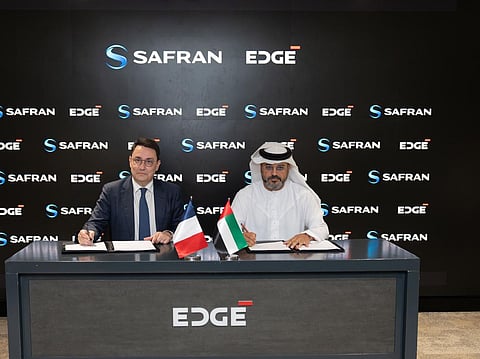
This shift is vividly illustrated by the strategic significance of the “Pax Silica” agreement signed between the UAE and Washington, a framework designed to secure advanced computing capabilities, artificial intelligence infrastructure, and the energy inputs that power the digital economy. Far more than a technical partnership, the agreement functions as a sovereignty document for the digital age, marking the UAE’s transition from a consumer of technology to a co-architect of its global norms.
In a world where power now derives from dominance over data flows, advanced processing, and energy networks, digital geography trumps traditional maps. Pax Silica embodies a sophisticated exchange: energy and capital in return for advanced technology. Leveraging its vast energy infrastructure and investment capacity, the UAE is positioning itself at the heart of the global artificial intelligence economy, securing a place along the newest frontiers of value creation: quantum computing, cybersecurity, and high‑performance data ecosystems.
These are not support functions. They are sovereign partnerships within an economy expected to reach tens of trillions of dollars in the coming decades.
A networked world, not a polarised one
Crucially, this strategic expansion has not come at the expense of alignment flexibility. Contrary to older theories that presume small states must anchor themselves within a single bloc, the UAE’s approach is defined by multi‑polar connectivity. While it deepens its tech collaboration with the United States, it simultaneously joins BRICS, expands trade with China and India, and concludes comprehensive economic agreements with an array of partners.
This is not tactical balancing; it is a reflection of autonomous decision‑making and strategic diversification. The UAE understands that sovereignty in the 21st century means having multiple options, not singular dependencies. It is this networked diplomacy that makes the country a hub in the architecture of global cooperation, a bridge rather than a bystander.
The economics of flow and stability
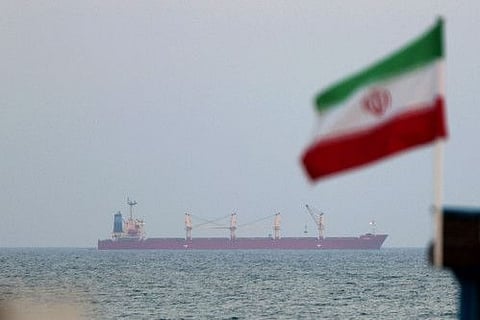
Economically, the UAE’s model stands in direct contrast to the logic of “managed disorder” that once defined parts of the region. The country has built what might be called an “economy of flows.” Through ports and logistics networks managed by Emirati companies, the UAE operates over 100 port and terminal facilities across the globe, anchoring it firmly at the centre of international supply chains.
This model depends on predictability. Instability raises insurance costs, disrupts cargo efficiency, and erodes the reputation that global capital relies upon. For the UAE, therefore, regional calm is not a moral slogan; it is a vital national interest.
This same logic explains why the UAE continues to attract global wealth and rank among the world’s leading destinations for foreign direct investment. The country draws high-net-worth individuals not through short-term incentives, but through a rare combination of high quality of life, political and security stability, a balanced social fabric, an encouraging investment environment, respect for personal freedoms, and a firm commitment to coexistence and tolerance. By 2025, an estimated 9,800 millionaires had relocated to the UAE, an average of 26 per day, bringing with them combined assets valued at approximately $780 billion. Capital, by its very nature, seeks safety, transparency, and continuity, not economies that derive influence from turbulence. The steady arrival of new investment projects and global wealth holders in the Emirates is therefore not a marketing coincidence, but a direct reflection of institutional stability, legal clarity, social openness, and a world-class living environment.
Breaking free from regional constraint
Commercially, the UAE has transcended the argument of “regional dependency.” More than 70 per cent of its non‑oil trade is linked to markets outside the Middle East. While the region remains important, it is no longer the state’s economic lung. This independence explains why the UAE neither seeks dominance over its neighbourhood nor perceives chaos as an opportunity. Disorder is not a lever for power; it is a direct threat to prosperity.
Strategic communication and soft power consistency
The UAE also understands that success invites scrutiny, and often, narrative warfare. Yet its response to escalating global discourse has been consistent: quiet implementation over loud reaction. In recent international summits, the UAE’s message has remained steady, built on development, diplomacy, partnership, and counter‑extremism. The coherence between policy and practice reinforces a new model of soft power based on credibility rather than rhetoric.
By hosting world forums – from science gatherings to the World Government Summit – the nation underscores its self‑image as a global platform for dialogue and policy innovation. Countries that assemble the world’s thinkers, investors, and policymakers are measured not by their geographic scale but by their influence on the direction of history.
Redefining sovereignty for the age of networks
The collapse of the “functional state” narrative under the weight of the Emirati example is not a matter of national pride alone. It signals a deeper redefinition of sovereignty itself. In an age of flows, nodes, and networks, the powerful state is no longer the largest in size, but the most deeply integrated into the systems that will define the next century.
The UAE, in this sense, is not performing a role within the old order. It is becoming an essential node in the new, a place where energy, capital, data, and ideas intersect. Its sovereignty is measured not by borders, but by bandwidth; not by how much territory it controls, but by how much stability it generates.
In a world searching for anchors amid fragmentation, the UAE’s story suggests a new metric for power: those who build the future will lead it, regardless of their geographic scale. The geography of tomorrow, as the Emirati model shows, is written not on land, but in code.
عن المؤلف